



How Autheo Bridges Web2 and Web3 Without Fragmentation
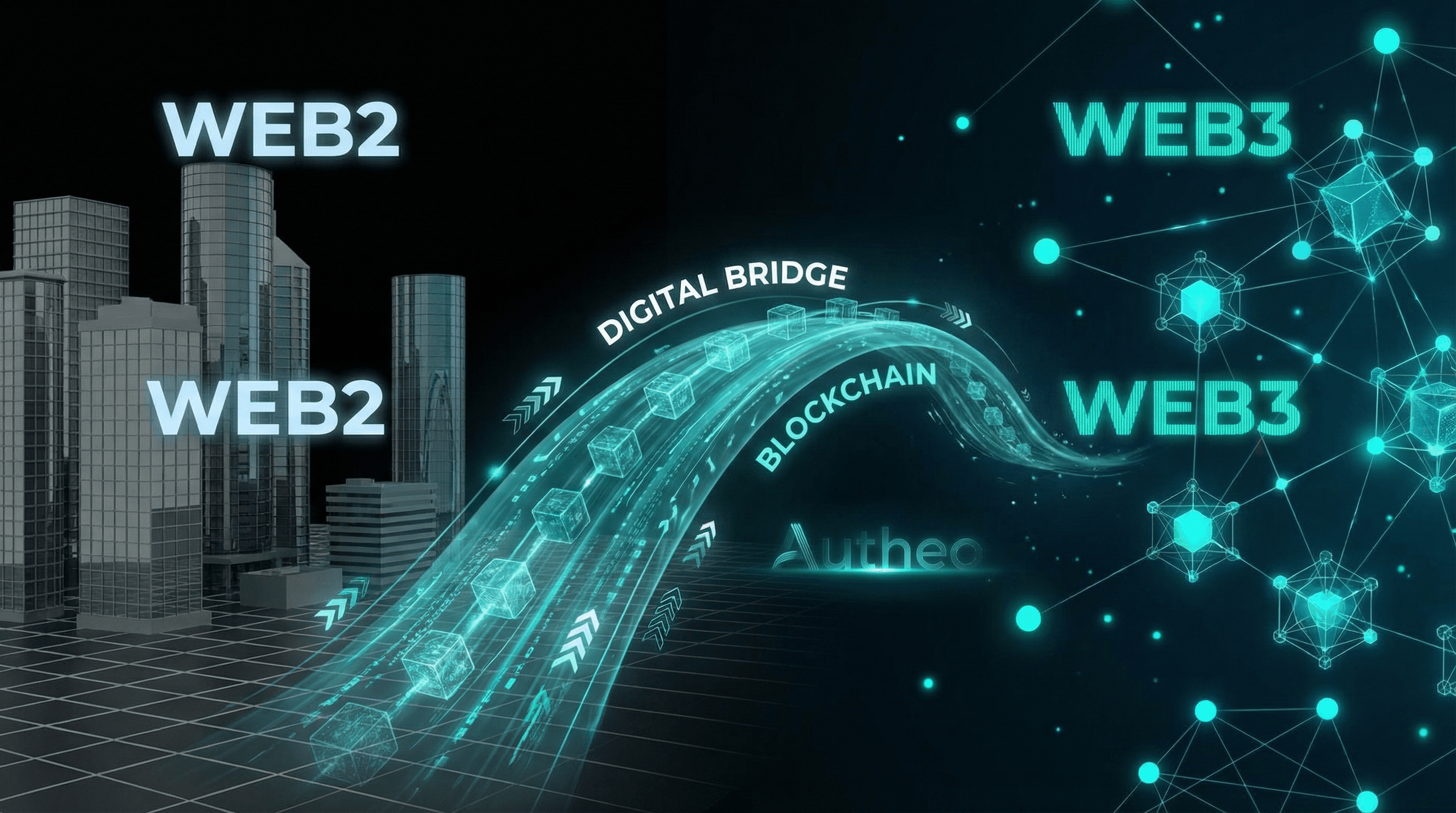
Autheo bridges Web2 and Web3 by providing a unified infrastructure layer that is designed to let enterprises add specific blockchain components, tokenized rewards, decentralized storage, on-chain identity, to existing platforms without rebuilding their entire technology stack as those layers roll out over the coming months. Instead of forcing a binary choice between the centralized internet and the decentralized web, Autheo treats Web2-to-Web3 migration as a spectrum of integration, enabling incremental adoption without fragmentation.
Loading tweet...
The Web2-Web3 Fragmentation Problem
Web3 has long promised a better internet, one where users own their data, assets have genuine on-chain provenance, and intermediaries are reduced or eliminated. But the transition has been plagued by fragmentation. Every new Layer-1 blockchain claims to be the future while adding to the noise. Most Web3 solutions require developers to rebuild their entire technology stack. Enterprise companies face a painful choice: stay on Web2 and miss out, or undergo a full-scale digital transformation that takes years and carries enormous risk.
'Most people underestimate the complexity of integrating Web3 systems into an already-built-out Web2 environment,' noted one industry expert at the 2026 Web2 to Web3 Conference in Abu Dhabi. The technical challenges are real: legacy system integration with ERP and CRM platforms, data synchronization between on-chain and off-chain states, performance requirements that demand near-real-time transaction processing, and regulatory compliance across jurisdictions.
Autheo's Integration-First Architecture
Autheo's founding philosophy, articulated by founder Scott Bayless, was to 'build the translator, not another island.' Rather than creating another isolated ecosystem, Autheo functions as an integration layer designed to connect Web2 systems and Web3 networks seamlessly.
The practical mechanism for this is Autheo's EVM compatibility and Cosmos SDK foundation, which means any application that speaks Ethereum or Cosmos can connect to Autheo natively. But the deeper integration goes further: Autheo provides developer APIs and SDKs that abstract away blockchain complexity, letting Web2 developers build decentralized features without requiring a full Web3 team or a complete technology rebuild.
Autheo is designed to enable incremental adoption: a SaaS company can start by adding tokenized loyalty rewards (minimal blockchain exposure), then layer in decentralized storage for content assets as that layer rolls out, then add on-chain identity for users, then eventually migrate more core infrastructure as confidence grows. At each step, the company's existing Web2 systems continue to function normally while the Web3 capabilities expand.
The DevHub and Full-Stack SDKs
Two components of Autheo's architecture are particularly critical for bridging the Web2-Web3 divide. First, the Full-Stack SDKs provide a single framework spanning frontend, backend, and smart contracts, eliminating the fragmented toolchains that have historically made Web3 development so difficult for teams coming from traditional software backgrounds. A React developer can use familiar patterns while deploying contracts that interact with Autheo's blockchain.
Second, the DevHub provides a native workspace for testing, deploying, and managing projects with AI-assisted orchestration. For enterprise developers used to sophisticated CI/CD pipelines, monitoring dashboards, and integrated testing environments, this closes the quality gap that has made Web3 development feel primitive by comparison to Web2 tooling.
Cross-Chain Interoperability Without Lock-In
A key anxiety for enterprises evaluating Web3 adoption is vendor lock-in, committing to a single blockchain ecosystem that may not interoperate with future systems. Autheo addresses this through its Layer-0 interoperability architecture: enterprises can build on Autheo without being locked in, maintaining the flexibility to interact with both Web2 systems and other chains including Ethereum, Solana, and Cosmos-based networks.
Autheo's zero-knowledge proof (ZKP) integration for cross-chain operations means applications can interact across networks without the usual fragmentation risks. The Autheo Browser enhances interoperability by connecting to external Layer-1s, creating a system where dApps can function without limitations across ecosystems.
Enterprise-Grade Security and Compliance
Web2 enterprises operate in highly regulated environments. Any Web3 integration must meet the same compliance standards as their existing systems, data privacy laws, financial regulations, identity verification requirements. Autheo's Decentralized Identity (DID) system is designed to provide compliance-ready identity solutions that support selective disclosure (sharing only what's required), auditability, and revocation as it rolls out on mainnet over the coming months, the features enterprise compliance teams need.
The post-quantum security of Autheo's identity layer is increasingly important as regulatory frameworks in the EU and US begin requiring quantum-resistant cryptography for sensitive data. Enterprises that adopt Autheo now are making a compliance-forward choice that will pay dividends as these requirements tighten.
Real-World Use Cases
Creator platforms can add on-chain ownership and royalty mechanics to existing content platforms without migrating away from familiar Web2 infrastructure. Gaming companies can issue in-game assets as NFTs on Autheo while keeping their game logic on traditional servers. SaaS companies can add tokenized reward systems that create genuine ownership for users without disrupting their billing or user management systems. Enterprise supply chains can add blockchain-verified provenance tracking for key assets while keeping their ERP systems operational.
Key Takeaways
- Autheo treats Web2-to-Web3 migration as a spectrum, not a binary choice, enabling incremental adoption without requiring a complete technology rebuild.
- Full-Stack SDKs and the DevHub close the quality gap between Web2 development experiences and Web3 tooling.
- EVM and Cosmos SDK compatibility ensures that Web2 developers can use familiar patterns while deploying blockchain features.
- Layer-0 interoperability prevents lock-in, enterprises can connect to Ethereum, Solana, and other chains alongside Autheo.
- Post-quantum secure DID is designed to provide compliance-ready enterprise identity that meets current and upcoming regulatory requirements, once that layer rolls out on mainnet over the coming months.
- Use cases span creator platforms, gaming, SaaS, and supply chain, any business with digital assets or user identity can benefit from Autheo's integration approach.
Start your Web3 integration journey with Autheo's enterprise-ready platform. Visit autheo.com or explore developer documentation at docs.autheo.com.
Gear Up with Autheo
Rep the network. Official merch from the Autheo Store.

AUTHEO Bucket Hat
$25

AUTHEO Flat Bill Cap
$25

AUTHEO Women's Columbia® Fleece Vest
$55

AUTHEO Large Organic Tote Bag
$30
Theo Nova
The editorial voice of Autheo
Research-driven coverage of Layer-0 infrastructure, decentralized AI, and the integration era of Web3.
About this author →Get the Autheo Daily
Blockchain insights, AI trends, and Web3 infrastructure updates delivered to your inbox every morning.