



What Powers Autheo's Validator Architecture
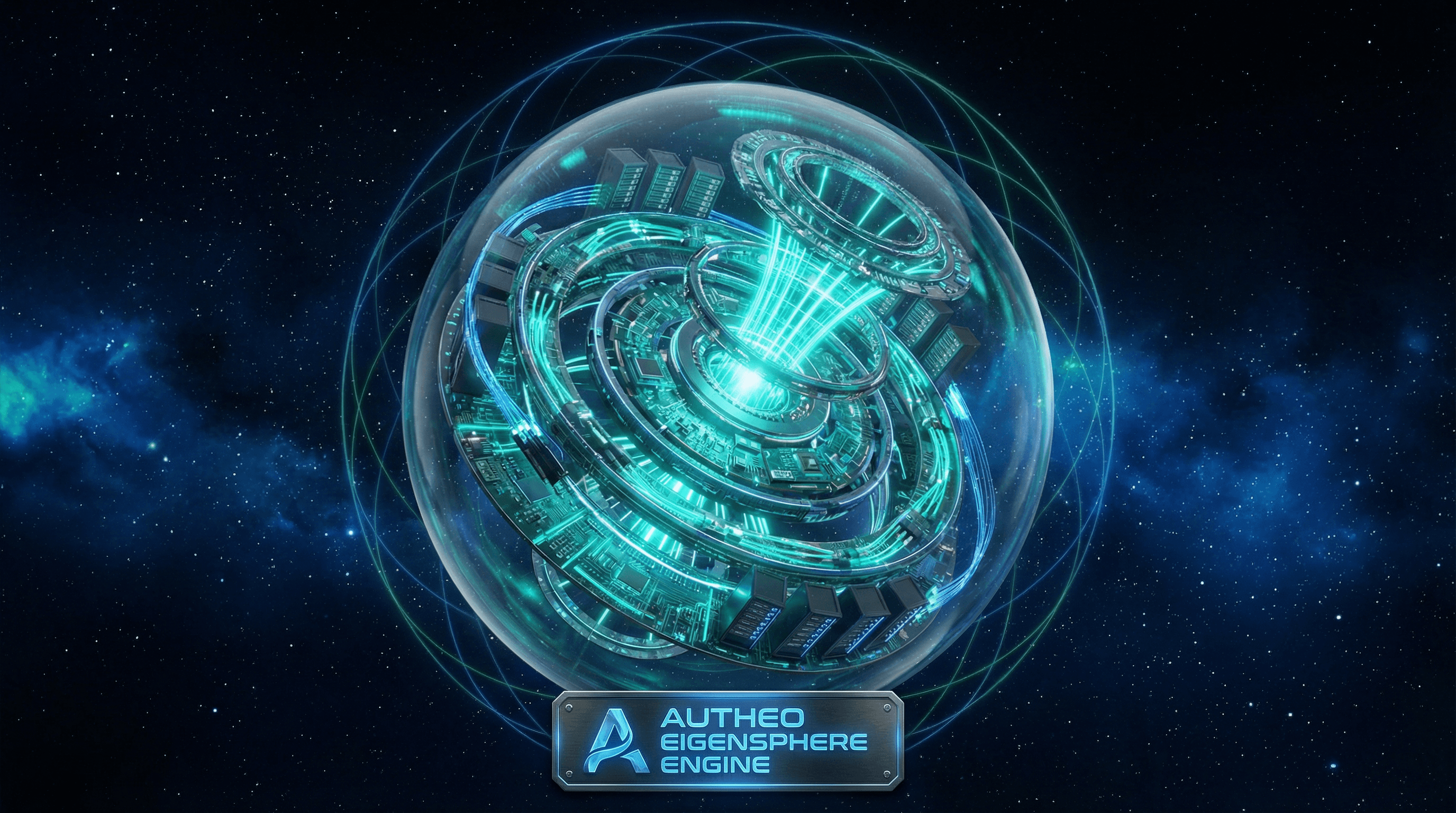
Autheo's validator architecture is designed to be more than a simple transaction-confirmation layer. It runs on Proof of Autheo, a hybrid PoA/PoS consensus model built on Cosmos SDK and CometBFT, and it's designed to expand into compute, storage, and AI orchestration as those layers roll out on mainnet over the coming months. Unlike traditional blockchain runtimes that simply validate transactions, Autheo's architecture is designed to enable each node to process, learn, and adapt, turning the network from passive infrastructure into an active, evolving ecosystem that becomes smarter with every participant who joins. Learn more about the Proof of Autheo consensus architecture.
Loading tweet...
What Powers Autheo's Validator Architecture?
Most blockchain runtimes are deterministic state machines, they execute transactions according to fixed rules and nothing more. Autheo's architecture is designed to be different. It combines four capabilities in one coordinated system: consensus finality (Proof of Autheo, running on Cosmos SDK and CometBFT), post-quantum security (NIST-standardized cryptography), adaptive AI orchestration (AI inference), and smart contract execution (a multi-language runtime supporting Solidity, Move, Vyper, Rust, Go, and TypeScript). This multi-capability approach is what allows Autheo to describe its nodes as the 'neural layer' of the Living Internet rather than simply 'validators'.
The practical implication: a validator on most blockchain networks secures transactions and earns staking rewards. Autheo's current validator node sale is for consensus validators, nodes that secure the network and earn THEO emissions. Autheo's architecture is designed to support additional node roles in future phases, including AI inference, data routing, decentralized compute, storage, and messaging services. As these capabilities are activated on the network's roadmap, they are intended to create multiple revenue streams for node operators, a much richer economic model than single-purpose blockchain networks.
Proof of Autheo: Hybrid PoA/PoS Consensus
Autheo's consensus model is Proof of Autheo, a hybrid approach that combines licensed validator eligibility with stake-weighted block production. Every validator must clear two gates to participate: holding an Autheo NFT License (the eligibility gate) and meeting the required staking or bonding threshold (the commitment gate). Once both gates are satisfied, the active validator set operates on a standard Proof-of-Stake model, producing blocks and earning rewards in proportion to stake.
Under the hood, Autheo runs on Cosmos SDK paired with CometBFT, the actively maintained fork of Tendermint Core BFT. That combination gives the network Byzantine fault-tolerant finality in roughly 1 to 3 seconds, using consensus software that already secures more than 200 production blockchains. Post-quantum cryptography is layered on top of that foundation: Autheo uses NIST-standardized primitives, including Kyber for key encapsulation, Dilithium for digital signatures, and Falcon for compact signature verification, so signatures and state transitions are secured against the quantum threat from the start rather than retrofitted later.
Post-Quantum Security: Built In, Not Bolted On
Autheo's security model treats post-quantum resistance as a foundational architectural choice rather than a future upgrade. The same NIST-standardized cryptographic primitives that secure consensus, Kyber, Dilithium, and Falcon, extend to identity and asset protection through TheoID, Autheo's planned decentralized identity layer, once it rolls out on mainnet over the coming months.
This matters most for use cases that need long-term data integrity alongside blockchain transparency. A hospital verifying patient records on-chain, or a financial institution recording trade settlements, both need cryptographic guarantees that will still hold once quantum computers become powerful enough to break today's standard encryption. Building on NIST-standardized post-quantum primitives from day one is designed to remove that risk rather than requiring an emergency migration later.
AI Inference: Adaptive Intelligence at the Protocol Level
AI inference is designed as Autheo's protocol-level machine learning capability, and unlike most blockchain AI implementations that bolt on AI as a dApp layer feature, AI inference is built to operate at the protocol level. Once it rolls out on mainnet over the coming months, it's designed to continuously monitor validator health, optimize data routing, manage workload distribution across nodes, and provide adaptive orchestration for complex multi-step operations. This is a separate capability from THEO AI, Autheo's DevHub coding assistant that helps developers write and scaffold code, which also isn't live yet.
This protocol-level AI is designed to create capabilities that simply aren't possible with add-on approaches. Once live, the network will be able to self-optimize in real time: routing transactions through the fastest available validators, rebalancing compute workloads when certain nodes are under heavy load, and predicting potential network bottlenecks before they become problems. The more participants join the network, the more data AI inference will have to work with, and the smarter the network is designed to become. This is the core of what Autheo means by a 'Living Internet': infrastructure built to learn, not just run.
Multi-Language Smart Contract Support
Autheo's smart contract layer is built for multi-language support rather than locking developers into a single virtual machine. Through Full-Stack SDKs, Autheo supports Solidity, Move, Vyper, Rust, Go, and TypeScript on one unified platform, so teams can build in the language their team already knows instead of learning a new one just to deploy on Autheo.
That multi-language support matters most for developer accessibility. Not every developer wants to learn Solidity, and requiring it is one of the biggest barriers Web2 engineers face when they consider building on a blockchain. By supporting familiar general-purpose languages alongside Solidity, Autheo lowers that barrier for teams coming from traditional software backgrounds.
L2 Systems: Decentralized Storage, Decentralized Compute, and Decentralized Messaging
Autheo's architecture is designed to be extended by additional Layer-2 systems in future network phases. Decentralized storage, delivered through the coming Autheo Marketplace, will provide decentralized data storage integrated natively into the network. Decentralized compute, also delivered through the coming Autheo Marketplace, will enable decentralized cloud computing workloads that node operators can contribute to and earn from. A decentralized messaging layer will deliver global infrastructure that applications can use for real-time communication between on-chain and off-chain systems. These capabilities are part of Autheo's roadmap and are not active in the current node sale phase.
Together, these components reflect an architectural vision where Autheo validators are designed to become more than staking nodes, full-stack infrastructure providers contributing to the compute, storage, and communication backbone of an emerging digital economy. Today's validator node operators earn THEO emissions for securing consensus; the roadmap is designed to expand their role into this multi-dimensional service model as each phase of the network activates.
Key Takeaways
- Autheo's validator architecture combines consensus, post-quantum security, and AI orchestration in one coordinated system, designed to enable nodes to process, learn, and adapt rather than simply validate.
- Proof of Autheo is a hybrid PoA/PoS consensus model, built on Cosmos SDK and CometBFT, that pairs licensed validator eligibility with stake-weighted block production for BFT finality in 1 to 3 seconds.
- Post-quantum cryptography (Kyber, Dilithium, Falcon) is built into consensus and identity from the start, rather than retrofitted after the fact.
- AI inference is designed to operate at the protocol level, monitoring validator health, optimizing routing, and making the network smarter as more participants join, once that layer rolls out on mainnet.
- Autheo's multi-language smart contract support (Solidity, Move, Vyper, Rust, Go, TypeScript) lowers the barrier for developers coming from non-Solidity backgrounds.
- Decentralized storage, decentralized compute, and decentralized messaging infrastructure, delivered through the coming Autheo Marketplace, are planned future-phase extensions that will expand validator capacity beyond consensus into full-stack infrastructure services.
Run an Autheo validator node and become part of the Living Internet's intelligence layer. Learn about the node economics at autheo.com/nodesale or explore the technical architecture at docs.autheo.com.
Gear Up with Autheo
Rep the network. Official merch from the Autheo Store.

AUTHEO Bucket Hat
$25

AUTHEO Flat Bill Cap
$25

AUTHEO Women's Columbia® Fleece Vest
$55

AUTHEO Large Organic Tote Bag
$30
Theo Nova
The editorial voice of Autheo
Research-driven coverage of Layer-0 infrastructure, decentralized AI, and the integration era of Web3.
About this author →Get the Autheo Daily
Blockchain insights, AI trends, and Web3 infrastructure updates delivered to your inbox every morning.