



Built by a Global Team: How Autheo Came Together Across 25+ Countries
Most tech company origin stories follow a familiar script. Two founders in a garage. A college dorm room. A coffee shop in San Francisco. The lone genius who saw what everyone else missed. It's a compelling narrative, and it's almost always a simplification. But Autheo's origin story doesn't even fit the template.
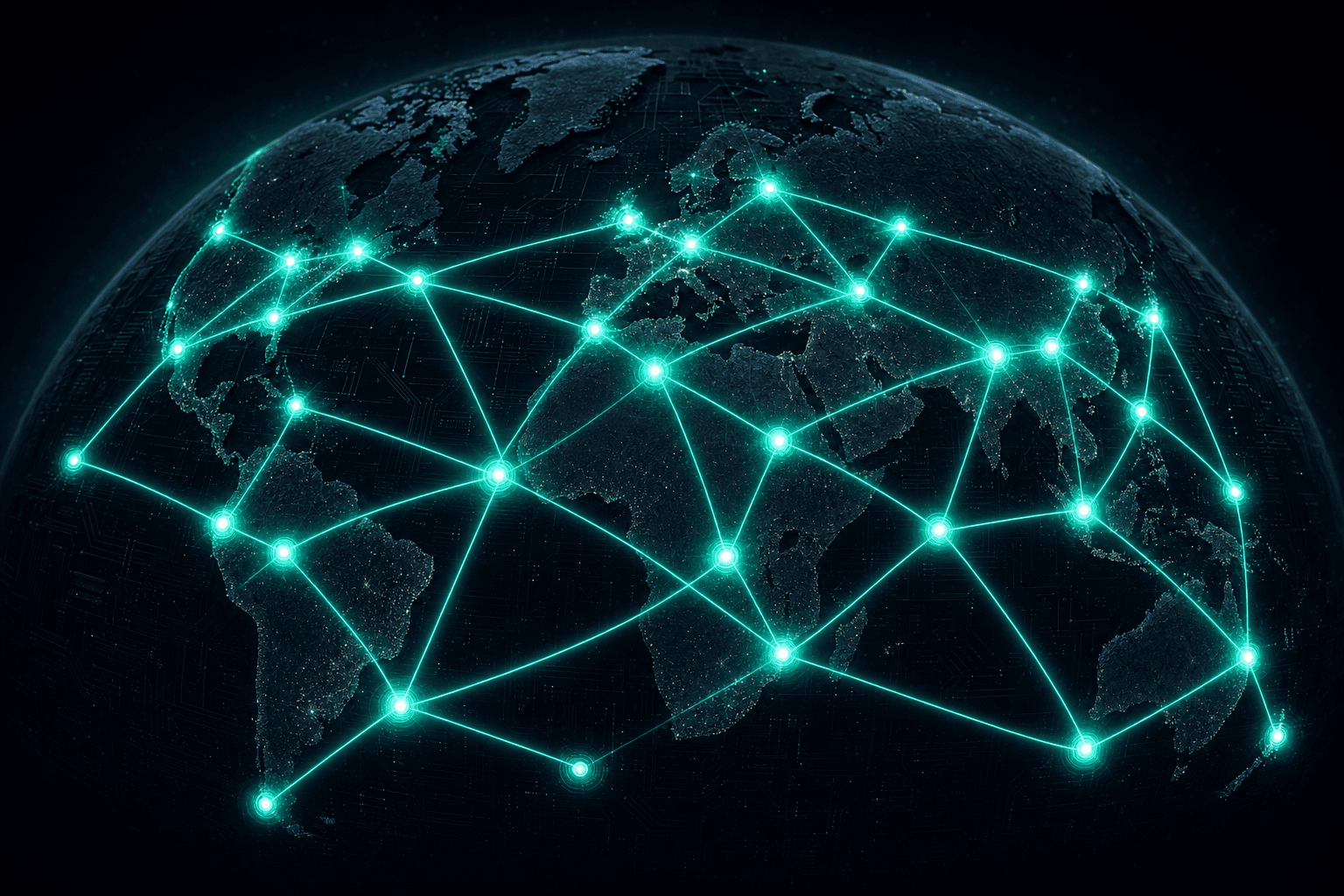
Autheo was built by more than 100 co-founders spread across 25+ countries, incubated by Launch Legends over 5 years. That's not a marketing line. It's a genuinely unusual way to build something as technically demanding as a Layer 1 blockchain, and it shaped the network in ways that are worth understanding.
What 100+ Co-Founders Actually Means
The word "co-founder" gets diluted easily, so let's be precise about what it means here. Autheo's co-founders aren't passive backers or advisory board members who lent their names to the project. They're contributors who brought domain expertise, market knowledge, and technical perspective to the design of the network over multiple years. Lawyers, engineers, product managers, economists, researchers, and operators from dozens of countries.
The full story of how 100+ co-founders built Autheo covers a lot of ground. But the short version is this: when you build with people from 25 different countries simultaneously, you stop designing for one market. You design for the world.
The Hard Part of Building Across Time Zones
Anyone who has worked on a distributed team knows the challenges are real. Asynchronous communication slows certain decisions. Cultural differences in how people express disagreement can create misunderstandings. Time zones that span 12 or 15 hours make real-time collaboration difficult for any given pair of people. These aren't trivial problems; they're the reason most large organizations still centralize their core teams.
Research from Harvard Business Review and Stanford's Virtual Human Interaction Lab has consistently found that distributed teams take longer to build the kind of trust that co-located teams develop naturally. Without deliberate structure, distributed projects fragment. Work gets duplicated. Decisions get made twice, or not at all.
What Launch Legends provided was that structure. As an incubator, they held the coordination layer: governance processes, decision-making frameworks, technical roadmaps with clear ownership. That scaffolding is what made a 100+ person global co-founder model work over 5 years instead of collapsing under its own complexity.
What 25+ Countries Brings to a Blockchain
Geographic diversity isn't just a feel-good metric. It has direct consequences for how a network gets designed. Regulations around digital assets vary enormously by country: what's permitted in one jurisdiction is restricted in another, and what works as a user experience in a high-bandwidth, high-trust market can be completely impractical in a market with unreliable connectivity or different identity norms.
Consider regulation: contributors from the US brought perspective on the CLARITY Act and what validator node protections look like in 2026. Contributors from the EU brought GDPR sensibility. Contributors from emerging markets brought a different question entirely: how do you build infrastructure that works for someone who may not have a legacy banking relationship but does have a smartphone?
According to the World Bank, roughly 1.4 billion adults globally remain unbanked. A large proportion of them are concentrated in Sub-Saharan Africa, South Asia, and Southeast Asia. If you're building a blockchain protocol and your co-founding team is entirely from one region, those users' needs are probably not on your radar. When your co-founders live in those regions, those users aren't an afterthought; they're a design input.
The Identity Question
One of the most interesting design decisions in Autheo is TheoID, the self-sovereign identity layer. Who owns your digital identity is a question that lands very differently depending on where you're asking it. In some countries, government-issued digital IDs are already widespread and trusted. In others, the state's relationship with citizen data is precisely why people don't trust centralized identity systems.
A team building TheoID from one cultural vantage point would likely build it for one kind of user. A team building it with co-founders from 25+ countries is forced to think about the spectrum of relationships people have with identity, trust, and authority. The result is a more universally useful system, not because that was a stated goal, but because the diverse perspectives wouldn't allow it to be any less.
5 Years Is a Long Time to Keep 100+ People Aligned
One of the quiet achievements of the Autheo build is simply that it stayed together. Five years is a long time. Markets shifted. Other projects came and went. The crypto industry went through a brutal bear cycle that wiped out hundreds of teams. Regulatory uncertainty made the path unclear for extended stretches.
Keeping 100+ co-founders from dozens of countries aligned and contributing through all of that required more than good intentions. It required a shared technical vision specific enough to give people direction, but flexible enough to evolve as the environment changed. That's a genuinely difficult organizational challenge, and the fact that Autheo shipped mainnet on May 14, 2026 suggests they solved it.
What This Means for the Network Itself
It's one thing to have diverse founders. It's another for that diversity to show up in the actual product. What Autheo is building reflects inputs from people who understand what a payment system needs to look like in a country where most of the population doesn't have a bank account, and from people who understand what enterprise adoption requires in a heavily regulated financial center.
The multi-language smart contract runtime, for example, lowers the barrier to entry for developers who don't speak Solidity. The machine payments and AI agent infrastructure is designed for a world where automated systems transact on behalf of humans, a use case that's more immediately relevant in some markets than others. These choices trace back to the diversity of perspectives that shaped them.
Distributed Teams Are the Future of Building
A 2023 report from McKinsey found that companies with diverse leadership teams were 35% more likely to outperform industry medians in profitability. That finding has been replicated across contexts: diverse decision-making groups catch more errors, consider more scenarios, and produce more robust plans. The mechanism isn't mysterious. When everyone in the room has the same background, they have the same blind spots.
Infrastructure should be built to last. The choices made in Autheo's design phase will shape what's possible on the network for years. Having those choices stress-tested by 100+ contributors from 25+ countries means the design has been challenged from more angles than any single-location team could manage. That's not a guarantee of success. But it's a meaningful structural advantage.
The THEO token, the utility token that powers the Autheo network, is a good example of this. THEO's tokenomics and utility design had to work across jurisdictions with very different regulatory environments. Getting that right required input from people who actually live and operate in those jurisdictions, not just from people who've read about them.
Autheo's origin story doesn't fit the garage-founder template. That's probably a feature. The world's infrastructure shouldn't be built by one person in one city who happened to be in the right place at the right time. It should be built by people who represent the full range of humans who'll eventually use it. That's a harder way to build. But it might be the right way.
Gear Up with Autheo
Rep the network. Official merch from the Autheo Store.

AUTHEO Columbia® Soft Shell Jacket
From $105

AUTHEO Flat Bill Cap
$25

AUTHEO Hoodie
$50

AUTHEO Notebook
$22.50
Theo Nova
The editorial voice of Autheo
Research-driven coverage of Layer-0 infrastructure, decentralized AI, and the integration era of Web3.
About this author →Get the Autheo Daily
Blockchain insights, AI trends, and Web3 infrastructure updates delivered to your inbox every morning.