



Why Enterprise Blockchain Adoption Is Accelerating in 2026
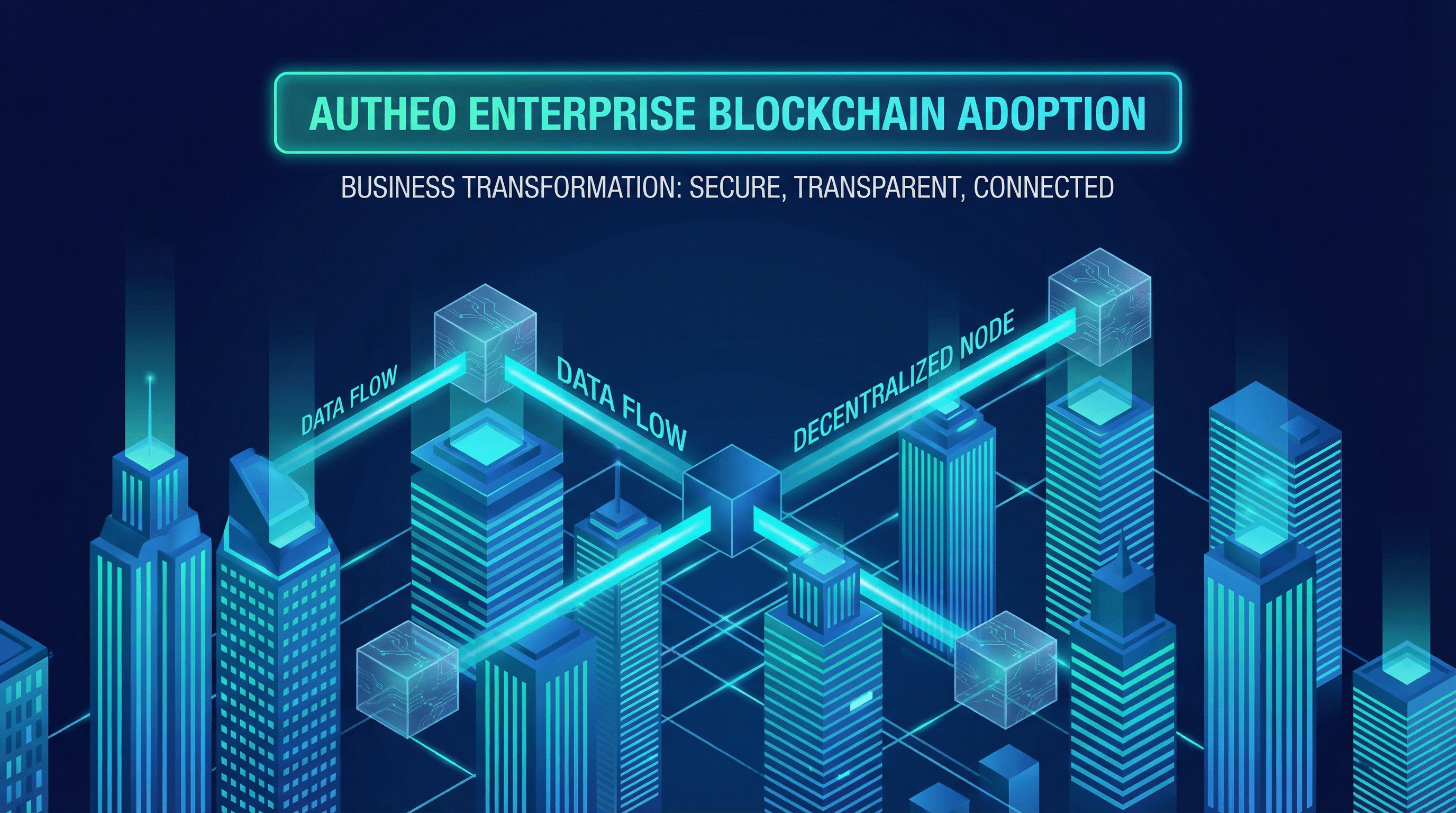
Enterprise blockchain adoption is accelerating in 2026 for three concrete reasons: regulatory clarity has arrived (the EU's MiCA framework and updated U.S. digital asset guidance are giving enterprises the legal certainty they need), the technology has demonstrably matured (DeFi processed over $2 trillion in 2025 transactions; supply chain blockchain reduces counterfeit goods by 30%; identity verification is 70% faster), and real-world ROI is measurable, supply chain and DeFi deployments are delivering 15-20% average returns, well above the 10% blockchain project average.
Loading tweet...
The Tipping Point: From Pilots to Production
The defining characteristic of 2026 enterprise blockchain is the shift from pilot programs to production deployments. The enterprise blockchain market was valued at $12.77 billion in 2025 and is projected to reach $29.29 billion by 2033 at a CAGR of 10.93%. Ethereum dominates decentralized applications with 75% market share, while Hyperledger Fabric powers 80% of permissioned enterprise blockchains.
JPMorgan's Onyx platform processes tokenized transactions daily using permissioned blockchain infrastructure. Major banks are working with R3 and Solana to tokenize equities and bonds, potentially cutting settlement times from days to minutes. Walmart mandates suppliers use IBM Food Trust for leafy greens tracking, reducing food safety investigation time from weeks to seconds. These are no longer experiments, they are operational systems managing real value at scale.
Finance: The Leading Vertical
Finance is the industry leading blockchain adoption, and the numbers are compelling. DeFi platforms processed over $2 trillion in 2025 transactions. Digital identity verification powered by blockchain accelerates customer onboarding by 70% compared to legacy systems. Smart contracts automate complex financial operations without human intervention, cutting processing time from days to minutes.
JPMorgan's Onyx, which began as an internal experiment, now facilitates billions in transactions for institutional clients. Cross-border payments are a major enterprise use case: traditional international wire transfers take 2-5 business days with correspondent bank fees of 3-5%. Blockchain-based systems achieve same-day settlement at a fraction of the cost. Reuters reports major banks are working toward tokenized equity settlement that could cut T+2 settlement to near-instant.
Supply Chain: The Most Mature Use Case
Supply chain represents blockchain's most mature enterprise deployment. Blockchain can reduce counterfeit products by up to 30% in supply chains by creating immutable product provenance records that verify authenticity at every distribution stage. 45% of supply chain executives now prioritize blockchain transparency initiatives. IBM Food Trust demonstrates the scale possible: tracking millions of food products from farm to retail with full supply chain visibility.
Supply chain metrics tell the story clearly. Traditional product verification takes 7-14 days; blockchain-based verification takes 2-3 seconds (99% faster). Counterfeit detection rates improve from 65% to 95%. Documentation processing drops from 5-7 days to 1-2 hours. Supply chain blockchain projects reduce counterfeit goods by 30% and deliver 15-20% average ROI when regulatory clarity exists.
Healthcare and Digital Identity
Healthcare blockchain deployments are accelerating, primarily for securing electronic health records and authenticating pharmaceutical supply chains. Blockchain can reduce healthcare data breaches by 40% through decentralized storage and cryptographic controls. Hospitals are beginning to use permissioned blockchains to ensure authenticity in medical supply chains, a critical application given the $35 billion annual cost of counterfeit pharmaceuticals globally.
Digital identity is emerging as a cross-industry catalyst. Self-sovereign identity frameworks allow users to selectively share verified credentials (age, professional licenses, educational credentials) without exposing unnecessary personal data or relying on centralized identity providers. Blockchain-backed digital ID systems accelerate verification by 70% compared to legacy systems. Microsoft ION and uPort demonstrate enterprise-ready implementations at scale.
What's Driving the Acceleration
Regulatory clarity is the single biggest catalyst. Until recently, enterprises avoided blockchain because of regulatory uncertainty around digital assets, tokenized securities, and cross-border transfers. In 2026, the EU's MiCA framework provides comprehensive rules for crypto assets. U.S. digital asset guidance has matured. The EU Post-Quantum Cryptography Roadmap creates compliance incentives for quantum-resistant infrastructure adoption.
Technology maturity is the second driver. Modern consensus algorithms (Byzantine Fault Tolerant, hybrid Proof of Stake) are faster and more energy-efficient than their predecessors. Zero-knowledge proofs enable privacy without sacrificing transparency, solving a key enterprise requirement. Layer-2 and sidechain solutions reduce costs for high-volume enterprise applications. And Blockchain-as-a-Service (BaaS) platforms from major cloud providers have dramatically lowered deployment barriers.
Autheo's Enterprise Proposition
Autheo is purpose-built for the enterprise adoption phase. Its architecture addresses the three main enterprise concerns: integration complexity (Full-Stack SDKs and APIs that work with existing ERP, CRM, and legacy systems), compliance and security (post-quantum DID, configurable permissions, zero-knowledge proofs for selective disclosure), and developer productivity (DevHub with AI-assisted orchestration that closes the quality gap between Web2 and Web3 tooling).
Autheo's consensus layer, Proof of Autheo (hybrid PoA/PoS), provides the identity-level accountability enterprises require (NFT License gating for validators) combined with stake-weighted block production. This hybrid model delivers the permissioned control of enterprise blockchain with the economic alignment of proof-of-stake.
Autheo's incremental adoption model is particularly valuable for enterprises: rather than requiring a full-scale blockchain transformation, enterprises can add specific blockchain capabilities, tokenized loyalty rewards, decentralized storage, on-chain identity, to existing platforms without rebuilding their technology stack. This reduces the cost, complexity, and risk that have slowed enterprise adoption for years.
Key Takeaways
- Enterprise blockchain market: $12.77 billion in 2025, projected $29.29 billion by 2033 at 10.93% CAGR.
- Key drivers: regulatory clarity (MiCA, U.S. digital asset guidance), technology maturity (ZKPs, Layer-2, BaaS), and measurable ROI (15-20% in supply chain and DeFi).
- Finance leads adoption. DeFi processed $2T+ in 2025, identity verification 70% faster, settlement times potentially seconds vs. days.
- Supply chain: 30% counterfeit reduction, 99% faster verification, 90% faster documentation processing with blockchain.
- Hyperledger Fabric powers 80% of permissioned enterprise blockchains; Ethereum leads decentralized applications.
- Autheo's incremental adoption model and enterprise-grade tooling position it as the infrastructure platform for the enterprise blockchain era.
Ready to bring blockchain to your enterprise? Start with Autheo's enterprise integration tools at autheo.com or explore technical architecture at docs.autheo.com.
Gear Up with Autheo
Rep the network. Official merch from the Autheo Store.

AUTHEO Bucket Hat
$25

AUTHEO Flat Bill Cap
$25

AUTHEO Women's Columbia® Fleece Vest
$55

AUTHEO Large Organic Tote Bag
$30
Theo Nova
The editorial voice of Autheo
Research-driven coverage of Layer-0 infrastructure, decentralized AI, and the integration era of Web3.
About this author →Get the Autheo Daily
Blockchain insights, AI trends, and Web3 infrastructure updates delivered to your inbox every morning.