



The Problem with Every Blockchain You've Heard Of
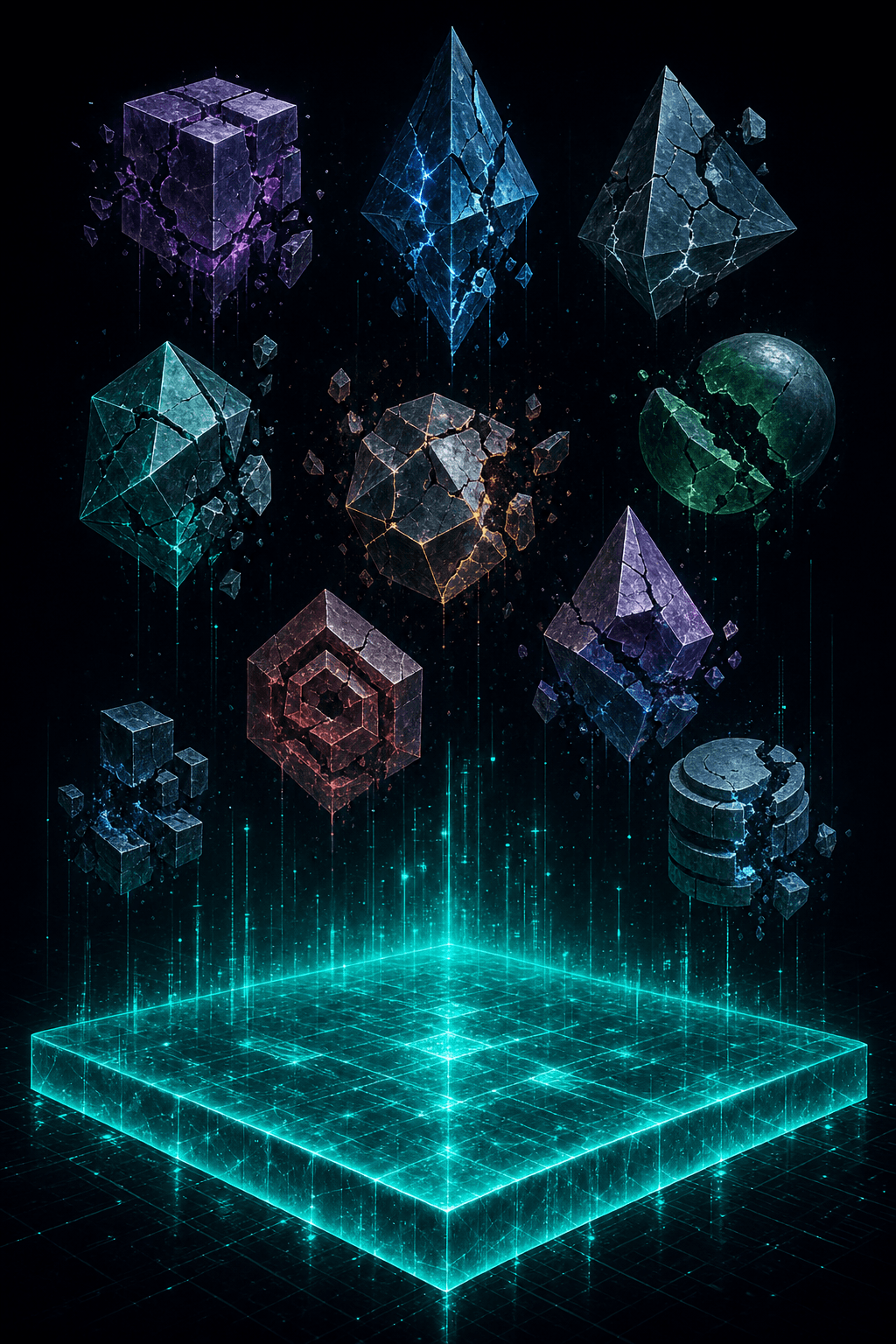
Here's something the crypto industry doesn't say often enough: every major blockchain that exists today was built to solve a real problem, and every one of them succeeded. Ethereum made programmable money possible. Solana proved that blockchains could be fast. Polkadot and Cosmos took seriously the idea that blockchains shouldn't be silos. Avalanche offered a new model for network scaling.
But each one also created new problems in solving the old ones. That's not a criticism. It's how technology works. The question is whether the next generation of networks has learned the right lessons. Let's go through the major players honestly, acknowledge what each got right, and name the trade-offs clearly.
Ethereum: The Programmable Ledger That Became Its Own Bottleneck
Ethereum's contribution to crypto is hard to overstate. Smart contracts, the ability to write self-executing code on a blockchain, made DeFi, NFTs, and decentralized applications possible. Before Ethereum, blockchain was mostly about moving value. After Ethereum, it was about programmable value: money that could follow rules, contracts that could execute without intermediaries, protocols that could exist without companies.
The problem Ethereum created was fragmentation. Because Ethereum itself couldn't scale to handle real-world demand, the ecosystem built Layer 2 networks to handle the overflow. Today there are dozens of active L2s: Arbitrum, Optimism, Base, Polygon, zkSync, and more. Each is a separate execution environment with its own token, its own liquidity pool, and its own set of bridges to get back to the main chain. The user experience is confusing, liquidity is fragmented, and moving between L2s creates real friction and real risk.
The Ethereum L2 ecosystem now has over 50 active rollup and scaling solutions, according to L2Beat data. There's also the language lock-in issue. Ethereum's native smart contract language, Solidity, is well-supported but non-standard. Developers who want to build on Ethereum need to learn Solidity; there's no straightforward path from Python or JavaScript. This limits the developer pool and creates ecosystem insularity that slows adoption.
Solana: Speed at a Price
Solana's pitch was simple and compelling: what if a blockchain could process tens of thousands of transactions per second at near-zero cost? It proved that was technically achievable. For consumer applications, gaming, NFT marketplaces, and certain DeFi protocols, the speed difference over Ethereum was genuinely transformational. Transaction fees measured in fractions of a cent versus dollars made entirely different use cases viable.
The trade-off was centralization and reliability. Solana's hardware requirements for validators run to 24-core CPUs and 256GB of RAM, effectively pricing out smaller operators. Solana's validator set has historically been concentrated among a relatively small number of large operators. The network has experienced several high-profile outages: significant downtime events in 2021 and 2022 that took the network offline for hours at a time. For a financial infrastructure layer, being offline for hours is disqualifying. A 2022 Messari report found Solana experienced six major network disruptions in a single year.
The technical reason is partly the hardware requirements. Running a Solana validator node requires high-end hardware that effectively excludes smaller operators. When you require powerful machines to participate, you naturally concentrate the validator set among well-resourced entities. Fast and cheap has costs; Solana paid for its throughput with centralization.
Polkadot: The Interoperability Vision That Got Complicated
Polkadot's original vision was elegant: a relay chain providing shared security, with parachains (application-specific blockchains) connecting to it and benefiting from that security without having to bootstrap their own validator sets. If you were building a new blockchain application, you wouldn't have to build a whole new security model. You'd plug into Polkadot's.
The execution proved harder than the vision. Parachain slots are expensive to win and complex to maintain. Projects compete in auctions for limited slots, which concentrates access among well-funded teams. The development environment for building parachains, Substrate, is powerful but has a steep learning curve. The promised ease of "plug in and benefit from shared security" turned out to require substantial technical and financial resources.
The result is a network with an impressive architecture that hasn't seen the broad developer adoption its design suggested it would. The gap between the theoretical elegance of the relay chain model and the practical difficulty of building on it has limited the ecosystem.
Cosmos: Interoperability Without a Safety Net
Cosmos took a different approach to the same interoperability problem. Rather than a relay chain with parachains, Cosmos created a protocol called IBC (Inter-Blockchain Communication) that allows independent blockchains to communicate and transfer assets between each other. Each chain in the Cosmos ecosystem maintains its own security and validator set; they coordinate through IBC rather than being secured by a central chain.
The trade-off is that there's no shared security. Every chain in the Cosmos ecosystem has to bootstrap its own validator set and maintain its own network security. New chains starting out face a genuine bootstrapping problem: small validator sets can be attacked more easily, which makes early-stage chains more vulnerable. Users moving assets between Cosmos chains take on the security assumptions of every chain in the path.
IBC has also been a target for exploits when individual chain security is weak. DeFiLlama data shows that cross-chain bridge attacks account for roughly 35% of all crypto hacks by value. The freedom to build your own chain comes with the full responsibility of securing it, and not every team gets that right. Cosmos solved the interoperability problem at the cost of a consistent security floor.
Avalanche: Subnets That Fragment Liquidity
Avalanche introduced the subnet model: the ability to create custom blockchain environments called subnets that run on Avalanche's infrastructure. For enterprises that want a private or semi-private blockchain with custom rules, subnets are genuinely attractive. You get the benefits of blockchain infrastructure without the full public exposure of a mainnet.
The problem is liquidity fragmentation. Every subnet is a separate execution environment. Assets locked on one subnet can't easily flow to another. DeFi protocols that depend on deep liquidity find that liquidity split across subnets becomes thinner and less efficient in each environment. The enterprise appeal of subnets creates friction for the DeFi and consumer use cases that benefit from a unified liquidity pool.
What Autheo Took From These Lessons
Autheo wasn't built to compete with these networks for the same use cases. It was built to address the problems they left unsolved. A direct comparison of Autheo against Polkadot, Cosmos, and Avalanche shows how the design choices differ from the ground up.
On the fragmentation problem: Autheo is a Layer 0 network, designed to support application chains while maintaining a shared security layer through Proof of Autheo consensus. Application chains built on Autheo inherit the security of the base layer rather than having to bootstrap their own. That's the Polkadot lesson applied more practically.
On the centralization problem: Autheo's validator set is limited to 399 positions, which creates structural scarcity, but those 399 positions are distributed across Core, Prime, and Sovereign tiers with accessible entry points. The hardware requirements are designed to be manageable by independent operators, not just institutional ones.
On future-proofing: every blockchain mentioned above was built without serious consideration of post-quantum cryptographic threats. Post-quantum cryptography is built into Autheo's architecture from the start, which means the security model doesn't need to be retrofitted when quantum computing becomes a practical threat. That's the lesson from retrofitting any system for electricity after the fact: you can do it, but the building is never quite right.
The Right Frame for Evaluating Networks
The right question to ask about any blockchain isn't "is it good?" It's "what problem did it optimize for, and what did it give up to optimize for that?" Solana optimized for speed and gave up some decentralization. Ethereum optimized for programmability and gave up scalability. Cosmos optimized for sovereignty and gave up shared security. Every trade-off reflects a specific bet about what matters most.
Those bets have aged differently. Ethereum's infrastructure trade-offs have had measurable consequences for the developer ecosystem and user experience. Solana's speed advantage is real, but the reliability issues have cost it credibility in enterprise conversations. Polkadot's architecture is elegant but under-adopted. Cosmos is thriving in specific niches but hasn't solved the security bootstrapping problem.
Autheo's bet is that the market now needs a network that takes the compute, identity, and AI use cases seriously from the start, not as add-ons. What Autheo actually is is a direct response to the gaps these networks left open. Whether that bet is right will become clear as the network grows. But the diagnosis of the problem is grounded in the real history of what the previous generation got right and what it missed.
For readers who want to understand exactly how Autheo addresses these structural problems, the complete Autheo guide walks through the full architecture in plain language.
Gear Up with Autheo
Rep the network. Official merch from the Autheo Store.

AUTHEO Bucket Hat
$25

AUTHEO Gradient Everyday Carry Tote Bag
$30.50

AUTHEO Large Organic Tote Bag
$30

AUTHEO Hoodie
$50
Theo Nova
The editorial voice of Autheo
Research-driven coverage of Layer-0 infrastructure, decentralized AI, and the integration era of Web3.
About this author →Get the Autheo Daily
Blockchain insights, AI trends, and Web3 infrastructure updates delivered to your inbox every morning.