



Tokenization Policy in 2026: Why Neutral Infrastructure Rails Are the Battleground
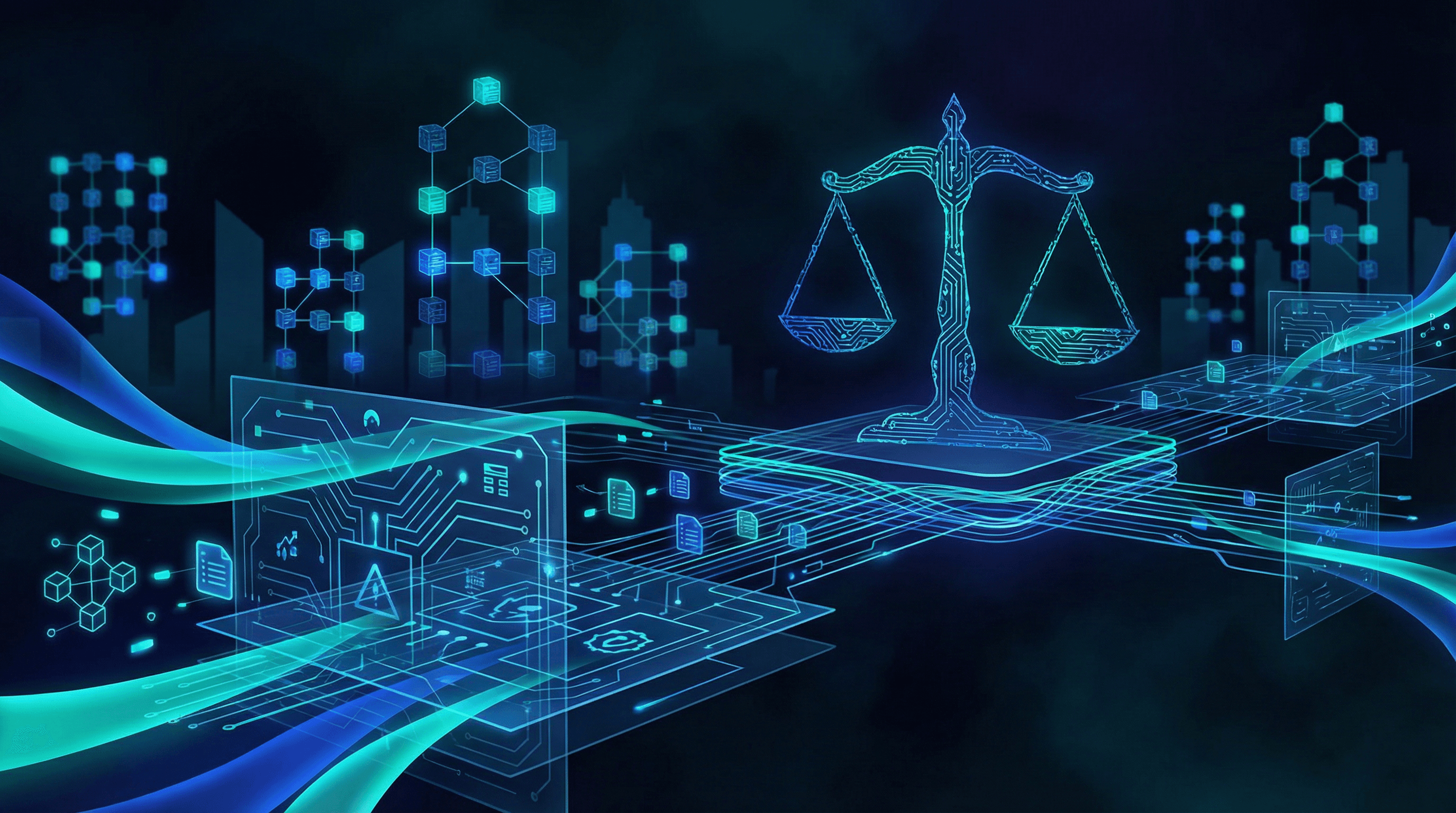
In 2026, tokenization is no longer a theoretical upgrade to financial markets, it is a live policy fight. Two of the most influential institutional voices in capital markets are making competing arguments to the SEC about how blockchain infrastructure should be regulated, and the outcome will determine whether the next generation of financial rails gets built in the United States or somewhere else. For Web3 infrastructure companies, understanding this debate is not optional.
What Are Tokenization Rails?
Tokenization is the process of representing a real-world asset, a stock, a bond, real estate, a fund share, as a token on a blockchain. The "rails" are the underlying infrastructure that makes this possible: validators that process transactions, smart contracts that encode transfer logic, software that records and settles positions, and the networks that connect all of it.
This infrastructure layer operates beneath the asset itself. Just as the internet carries email without reading your messages, tokenization rails carry asset transfers without being the securities themselves. The rails do not own assets, make lending decisions, or hold customer funds. They process instructions and record outcomes.
The tokenized real-world asset (RWA) market has grown to $26.77 billion as of March 30, 2026, up from roughly $5 billion at the start of 2025, a 400%+ increase in fifteen months. Analysts project the market could reach $16 trillion by 2030 according to Boston Consulting Group, with McKinsey placing a more conservative baseline of $2–4 trillion. Either way, the infrastructure enabling that market is becoming one of the most consequential technology questions in finance. What happens to that infrastructure depends heavily on what regulators decide in the next twelve months.
The Blockchain Association's Neutral Rails Argument
On April 6, 2026, the Blockchain Association filed a formal response with the SEC rebutting arguments made by Citadel Securities against tokenized U.S. equity securities and DeFi trading protocols. The filing makes a pointed, specific argument: securities laws regulate intermediaries, not neutral infrastructure.
Citadel's position, as characterized in the filing, asks the SEC to treat blockchain rails as though they were the same as exchanges, brokers, or dealers. The Blockchain Association says that framing is both legally wrong and bad policy.
The filing's core logic: validators, autonomous smart contracts, and non-custodial software do not become regulated middlemen simply because they support market activity. Federal securities laws have always regulated persons engaged in specific intermediary activities, custody, order routing, clearing, and settlement functions performed by humans or firms on behalf of clients. Neutral technology infrastructure, even when it carries securities-related data, is not itself an intermediary.
"Tokenization is about bringing better technology to the most important capital markets in the world," said Summer Mersinger, CEO of Blockchain Association. "This filing reflects Blockchain Association's broader commitment to advancing tokenization policy in Washington and ushering in a market evolution that can make U.S. finance more efficient, more resilient, and more globally competitive."
The filing also notes that the SEC already has tools, exemptive relief, no-action guidance, iterative regulatory pathways, to support responsible development without imposing an intermediary framework built for a different era. The industry is not asking for a free pass. Tokenized securities are still securities. The question is whether the law gets applied in a way that accounts for how modern infrastructure actually works.
DTCC's Intermediation Framing
While the Blockchain Association argues for regulatory restraint on infrastructure, the DTCC is taking a different approach, one that is less about protection from regulation and more about how to embed tokenization within existing regulated structures.
In December 2025, the SEC issued a no-action letter to DTCC's subsidiary, the Depository Trust Company (DTC), authorizing a three-year controlled pilot for tokenization services on approved blockchains. The pilot covers highly liquid assets. Russell 1000 equities, major ETFs, and U.S. Treasury instruments, and is structured so that DTC retains full intermediary status throughout.
DTCC's model is deliberately preservationist. Under its design, tokens are not the securities and are not themselves security entitlements. Instead, they serve as an alternative recordkeeping mechanism for entitlements that remain at DTC. DTC retains a "root wallet" on each approved blockchain with the ability to mint, burn, or forcibly transfer any token, even without the private key of the wallet holding it. LedgerScan, an off-chain monitoring system, serves as DTC's official books and records, not the blockchain itself.
The implicit argument: blockchain can compress friction in post-trade processing, but it does not remove the need for a central securities depository, governance mechanisms, or regulatory accountability. Intermediation is not eliminated, it is modernized. Someone still needs to be responsible for erroneous transfers, compliance screening, OFAC sanctions checks, and investor protections under Article 8 of the UCC. Under DTCC's model, that someone is DTC.
This framing is not anti-tokenization. DTCC is actively building out the capability. But it is a direct challenge to any argument that blockchain infrastructure can or should be treated as purely neutral and unaccountable, because even DTCC's approach requires a trusted intermediary sitting at the center with override authority.
What SEC Regulation of Rails Would Mean for Builders
These two positions, the Blockchain Association's neutrality argument and DTCC's intermediation framing, define the outer edges of the regulatory debate, and the stakes for infrastructure companies in between are significant.
If the SEC adopts the Citadel/DTCC-adjacent view and treats blockchain rails as de facto intermediaries, any company running validator infrastructure, smart contract protocols, or settlement tooling for tokenized securities would face broker-dealer or clearing agency registration requirements. That means capital requirements, compliance programs, supervisory structures, and ongoing regulatory oversight. For a startup building Web3 infrastructure, the registration path alone could take years and cost millions before a single transaction clears.
The cost is not just financial. Broker-dealer status comes with restrictions on how you can build, what markets you can serve, and who can use your infrastructure. For Layer 0 blockchain infrastructure in particular, intermediary classification would effectively re-centralize the layer of the financial stack that tokenization is supposed to decentralize.
On the other hand, if the SEC accepts the Blockchain Association's framework, that neutral infrastructure is not itself subject to intermediary regulation, even when it carries securities activity, builders get regulatory clarity without registration burden. They can focus on protocol design, compliance-aware architecture, and interoperability instead of defending their legal status with every product launch.
The outcome also has implications for the Wyoming-based Web3 ecosystem, where state-level blockchain-friendly legislation has given companies a significant structural advantage. Federal intermediary classification would override those protections for any company touching tokenized U.S. securities.
How Compliance-Ready Infrastructure Changes the Equation
The binary framing, regulated intermediary or neutral rail, may ultimately be a false choice. The more durable answer for builders is compliance-by-design: infrastructure that is architecturally neutral but operationally configured for the compliance requirements of the assets it carries.
DTCC's pilot offers a preview of what this looks like in practice. The approved blockchains must support compliance-aware tokenization, meaning tokens can only transfer between registered wallets. OFAC screening happens at the wallet registration level, not at the transaction level. The system is designed so that regulatory requirements are satisfied by the architecture, not bolted on afterward.
For independent infrastructure companies, the lesson is similar. A validator network that can enforce transfer restrictions, support KYC-gated participation, and produce auditable transaction logs is not a regulated intermediary, but it is also not invisible to compliance requirements. It is neutral infrastructure that makes compliance possible for the regulated entities using it.
This is the design philosophy that matters for the current regulatory environment. Builders who treat compliance as an afterthought will face the worst of both worlds: regulatory scrutiny without the protections that come from formal registration. Builders who architect compliance into the infrastructure layer from the start can support regulated markets without becoming the regulated entity. The broader Web3 infrastructure opportunity, projected to reach into the hundreds of billions over the next decade, is available only to companies that solve this problem credibly.
Autheo's Positioning in the Infrastructure Debate
Autheo is a centralized commercial infrastructure company building validator-based network rails for the Web3 economy. The current node sale offers validator nodes, the core infrastructure layer that will underpin Autheo's network. Future capabilities, including compute, storage, and AI inference workloads, are planned additions to the network's scope.
The tokenization policy debate is directly relevant to how Autheo's infrastructure will operate and who it will serve. As the SEC works through the Blockchain Association's arguments and DTCC's pilot matures, the question of what "neutral infrastructure" means legally will become the governing framework for networks like Autheo's.
Autheo's approach aligns with the compliance-by-design principle: building infrastructure that can support regulated markets, tokenized securities, RWA platforms, institutional DeFi, without itself seeking to function as an intermediary. The THEO utility token powers access to network resources. It is not a governance token and carries no claim on revenue or control over the network. The company structure is a centralized commercial entity, which provides clear legal accountability, the kind of accountability that makes institutional partners comfortable and that regulators can engage with directly.
As Washington debates whether to regulate the rails or protect them, infrastructure companies that have already answered the compliance question internally will be best positioned regardless of which policy framework prevails. That is the practical upside of building compliance-by-design: the regulatory outcome matters less when the architecture already supports either path.
Key Takeaways
The Blockchain Association's April 2026 SEC filing argues that securities laws regulate intermediaries, not neutral blockchain infrastructure, validators and smart contracts should not be classified as brokers or dealers simply because they power tokenized markets.
DTCC's tokenization model takes the opposite view operationally: blockchain can modernize recordkeeping, but intermediation does not disappear. DTC retains override authority, compliance screening, and legal accountability throughout.
The SEC's decision on how to classify tokenization infrastructure will determine whether independent blockchain infrastructure companies face broker-dealer registration requirements, a potentially existential burden for early-stage builders.
Compliance-by-design, building compliance requirements into the infrastructure architecture rather than treating them as an overlay, is the practical path for infrastructure companies that want to serve regulated markets without becoming regulated entities themselves.
The RWA tokenization market has already reached $26.77 billion on public blockchains as of March 2026 and is projected to reach trillions within the decade; the infrastructure companies that establish regulatory clarity now will be positioned to capture a disproportionate share of that growth.
Autheo is building validator network infrastructure designed for the next phase of the financial internet. Join the node sale and help build the rails that regulated markets will run on. Explore the Autheo Node Sale →
Gear Up with Autheo
Rep the network. Official merch from the Autheo Store.

AUTHEO Bucket Hat
$25

AUTHEO Gradient Everyday Carry Tote Bag
$30.50

AUTHEO Large Organic Tote Bag
$30

AUTHEO Hoodie
$50
Theo Nova
The editorial voice of Autheo
Research-driven coverage of Layer-0 infrastructure, decentralized AI, and the integration era of Web3.
About this author →Get the Autheo Daily
Blockchain insights, AI trends, and Web3 infrastructure updates delivered to your inbox every morning.