



The Five Things Autheo Does That Other Blockchains Made You Choose Between
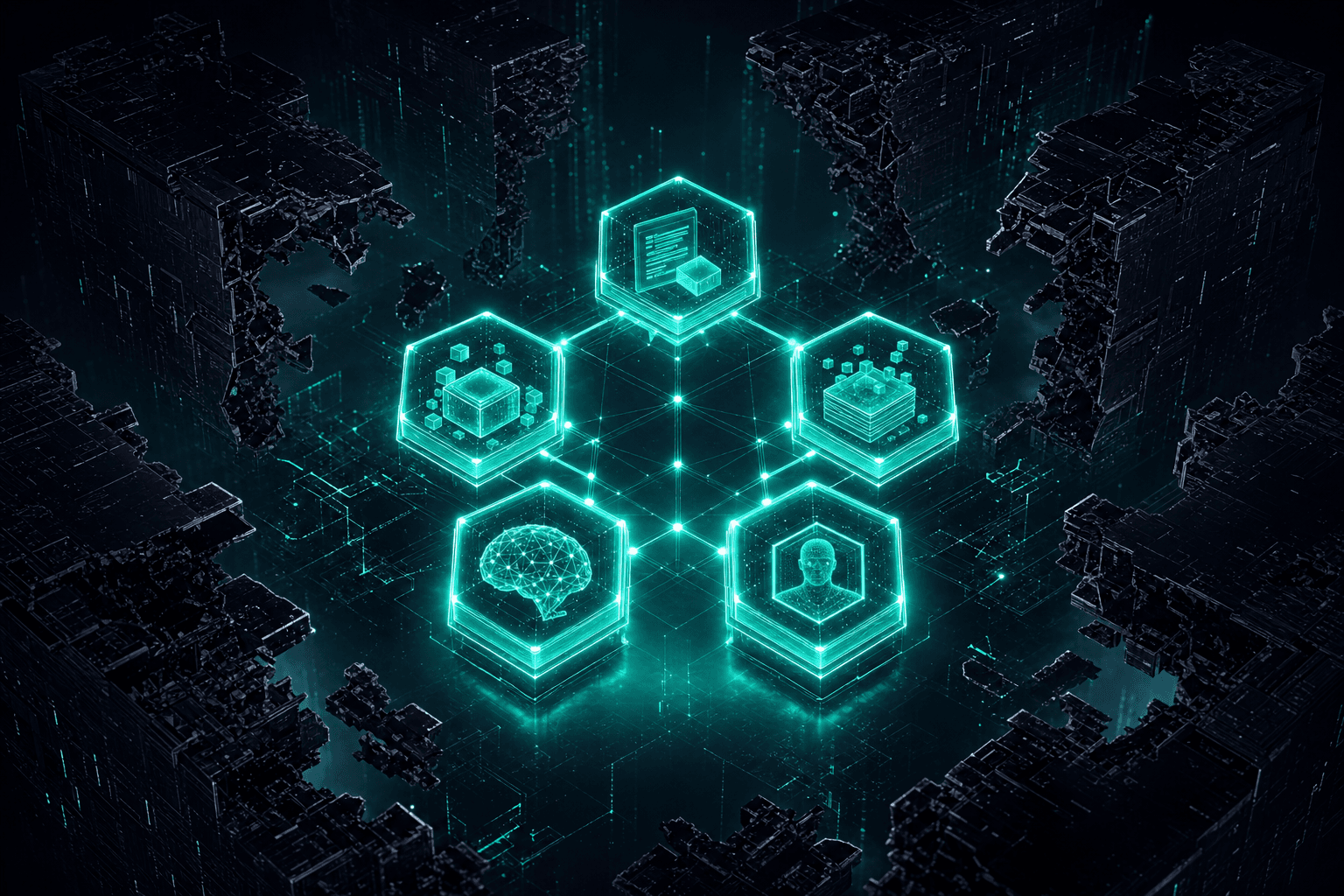
There's a running frustration in the blockchain developer community that doesn't get talked about enough outside technical circles. Every major network forces trade-offs. You can have smart contracts, but not native storage. You can have decentralized compute, but not a complete Layer 1. You can have decentralized storage, but it won't talk natively to your application logic. If you want everything, you stitch together five different networks, each with its own token, its own security model, and its own failure mode.
Autheo is built around a different premise: all five capabilities on one network. What Autheo is, at its core, is a Layer 1 blockchain designed to combine multi-language smart contracts, decentralized compute, decentralized storage (both delivered through the coming Autheo Marketplace), AI inference, and self-sovereign identity (TheoID) into a single network. Smart contracts and staking are live on mainnet today; decentralized compute, decentralized storage, AI inference, and TheoID are rolling out in phases over the coming months. Let's walk through each one with a real-world analogy, because the technical terminology obscures something that's actually pretty intuitive.
1. Smart Contracts in Multiple Languages
The analogy: imagine a country where to do business legally, you must speak one specific language, and it's not your native language. That's Ethereum for most developers. Solidity is Ethereum's smart contract language, and it's unlike most other programming languages. Tens of millions of developers know JavaScript, Python, or Rust. A much smaller number knows Solidity.
Autheo's multi-language runtime removes that barrier. Developers can write smart contracts in the languages they already know, dramatically expanding the pool of people who can build on the network without a steep relearning curve. According to the Stack Overflow Developer Survey 2024, JavaScript and Python together account for more than 60% of developer primary language use. Solidity doesn't appear in the top 20.
For developers ready to try it, the guide to deploying your first smart contract on Autheo walks through the process from start to finish. It's designed to be accessible, not intimidating.
2. Decentralized Compute
The analogy: today, most applications on the internet run on servers owned by three companies. Amazon Web Services, Microsoft Azure, and Google Cloud together account for over 65% of the global cloud infrastructure market, according to Synergy Research Group's 2024 data. When AWS has an outage, a significant fraction of the internet goes down with it. You probably remember at least one afternoon where half your apps stopped working at once.
Autheo's decentralized compute, delivered through the coming Autheo Marketplace, is the alternative. Decentralized cloud computing means application workloads run on a distributed network of nodes rather than centralized data centers, and it's rolling out on Autheo's mainnet over the coming months. No single point of failure. No single company with the ability to pull the plug on your application. Once live, the compute power will be available across the network, and you'll pay for what you use without a corporate intermediary capturing the margin.
The key difference between Autheo's decentralized compute and something like Akash Network is integration. Akash is a decentralized compute marketplace, but it isn't a full Layer 1 blockchain with smart contracts, storage, and identity. Once live, compute on Autheo will share the same network, the same token, and the same security guarantees as everything else. No bridge, no separate wallet. It's the same network.
3. Decentralized Storage
The analogy: your files are hostages. Not metaphorically. When your photos, documents, and data live on Google Drive, Dropbox, or iCloud, you don't actually control them. The service can change its pricing, change its terms, get hacked, or shut down. Your data is accessible only as long as you maintain the relationship with the company that actually holds it.
Autheo's storage layer, delivered through the coming Autheo Marketplace, is designed as decentralized storage where files are distributed across the network and cryptographically verifiable, and it's rolling out on mainnet over the coming months. Think of it like Filecoin or IPFS, but native to a full Layer 1. The crucial advantage over Filecoin is the same as the decentralized compute advantage: integration. Once live, a smart contract on Autheo will be able to read from and write to that storage layer natively. On Ethereum, you'd need to build a bridge to Filecoin, which introduces latency, cost, and new points of failure.
For applications that store user data, documents, or media, this matters a lot. Your application logic and your data live on the same network, under the same security model, without the complexity of multi-network coordination.
4. AI Inference
The analogy: right now, when you use an AI model through an API, you're trusting that the company hosting that model is running it accurately and consistently, without knowing when it was updated or whether the output you got today is the same you'd get tomorrow. Blockchain solves AI's trust problem by making AI inference on-chain: verifiable, auditable, and not controlled by any single company.
Autheo's AI inference layer is designed to let AI models run on the network without routing queries through OpenAI, Google, or Anthropic, and it's rolling out on mainnet over the coming months. The AI running your life has a landlord right now, and that landlord can change prices, shut off access, or change how the model behaves at any time. Decentralized AI inference is built to change that arrangement fundamentally once it's live.
This becomes particularly important as AI agents transact on-chain. If an automated AI agent is making financial decisions on your behalf, you want the AI's reasoning to be auditable, not locked inside a black box at a company you can't audit.
5. Self-Sovereign Identity (TheoID)
The analogy: your login is someone else's asset. When you sign in with Google, Facebook, or Apple, those companies know every site you log into, every service you authenticate with, and exactly when you do it. Your identity is a data product for them. TheoID inverts that relationship.
TheoID is Autheo's self-sovereign identity layer, rolling out on mainnet over the coming months. Once live, you'll hold your own credentials and choose what to share with each service, sharing only the minimum necessary rather than your entire identity profile. No platform will be able to revoke your identity because no platform owns it. It will be stored on-chain under your cryptographic control.
The integration advantage here is the same as with storage and compute: TheoID is designed to be native to the network. Once live, a smart contract will be able to verify your identity credential without you revealing your full identity. That's called selective disclosure, and it's what makes privacy-preserving applications possible. On other networks, you'd need to connect a separate identity protocol like ENS or Worldcoin, with all the bridging complexity that entails.
Why Integration Is the Point
Five capabilities on one network isn't just a feature count. The value is in how they interact. Comparing Autheo to Polkadot, Cosmos, and Avalanche helps illustrate this: other multi-chain systems achieve flexibility by letting different chains communicate, but those chains still have separate security, separate tokens, and separate failure modes. Autheo's capabilities share one security model, one token (THEO), and one set of validators.
The Proof of Autheo consensus mechanism secures all five layers simultaneously. A validator confirming a transaction is also, implicitly, participating in the security of the storage, compute, and identity layers. That unified security is something you simply can't replicate by stitching five separate networks together with bridges.
Think about what a real-world application actually needs. It needs compute to run its logic. It needs storage to hold user data. It needs identity to know who it's serving. It needs smart contracts to enforce rules and handle payments. It may need AI inference to personalize or automate. Today, meeting all five needs means five ecosystems, five tokens, five points of failure. On Autheo, it's designed to be one, with smart contracts and staking live now and the remaining layers rolling out on mainnet over the coming months.
The infrastructure opportunity in Web3 is substantial precisely because no one has shipped all five on one network before. The trade-offs were real constraints, not arbitrary design choices. Building on a single network that eliminates them isn't just more convenient; it opens up categories of applications that couldn't be built efficiently on fragmented infrastructure.
Gear Up with Autheo
Rep the network. Official merch from the Autheo Store.

AUTHEO Gradient Everyday Carry Tote Bag
$30.50

AUTHEO Pom-Pom Beanie
$25

AUTHEO Large Organic Tote Bag
$30

AUTHEO Notebook
$22.50
Theo Nova
The editorial voice of Autheo
Research-driven coverage of Layer-0 infrastructure, decentralized AI, and the integration era of Web3.
About this author →Get the Autheo Daily
Blockchain insights, AI trends, and Web3 infrastructure updates delivered to your inbox every morning.